

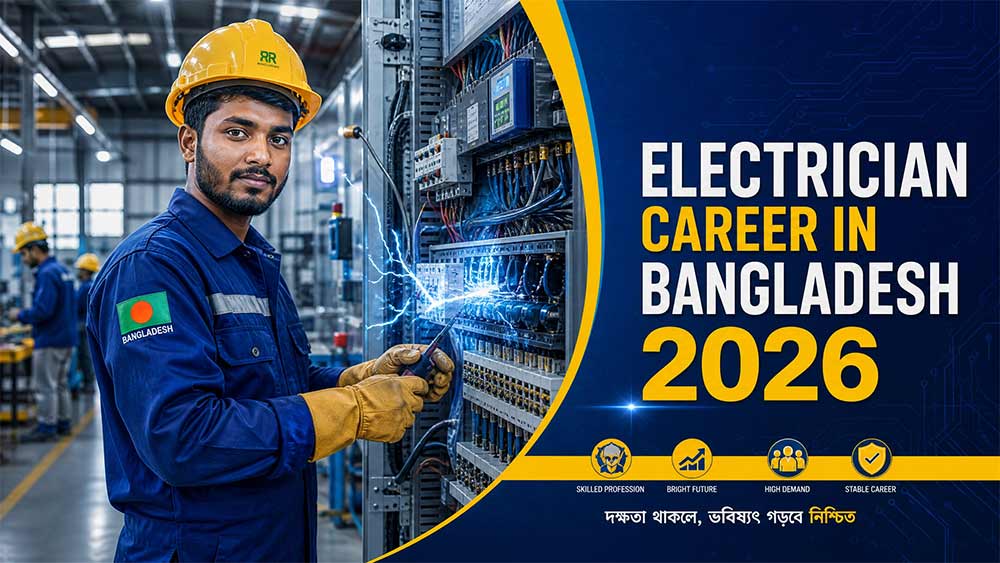
Electrician Career in Bangladesh: How Much Can You Earn in 2026
Electrician Career in Bangladesh: How Much Can You Earn in 2026?
If you are thinking about building a career as an electrician in Bangladesh, you are making one of the smartest decisions of your life. Electricity is the backbone of every industry, every home, and every modern structure. Skilled electricians are in high demand across Bangladesh and around the world — and that demand is only growing.
But the most important question most beginners and career changers ask is: How much does an electrician earn in Bangladesh? In this complete guide, we will break down the electrician salary in Bangladesh for 2026, compare different experience levels and specializations, explore overseas income opportunities, and show you exactly how to start or upgrade your electrical career today.
Why an Electrician Career Is Worth Pursuing in Bangladesh
Bangladesh is undergoing one of the fastest infrastructure expansions in its history. The government’s Vision 2041 plan, new export processing zones (EPZs), the growing garments and textile sector, real estate booms in Dhaka and Chittagong, and rapid industrialization — all of these are creating an enormous need for trained and certified electricians.
According to industry data and recruitment trends, electricians remain among the top ten most in-demand technical workers in Bangladesh. More importantly, a certified electrician with practical skills can secure employment within weeks of completing training — whether in Bangladesh or abroad.
Let us look at the key reasons this career path is worth considering in 2026:
- High and consistent job demand across residential, commercial, and industrial sectors
- Relatively short training period (1–3 months) to enter the workforce
- Clear salary growth path based on experience and specialization
- Strong overseas employment opportunities in the Middle East and Southeast Asia
- Ability to become self-employed or start your own electrical contracting business
- Government and international organizations actively support vocational training
Electrician Salary in Bangladesh: A Complete Breakdown for 2026
The electrician’s salary in Bangladesh varies based on several factors, including experience level, type of work (residential vs. industrial), location (Dhaka vs. other cities), and specialization (house wiring vs. PLC/VFD automation). Below is a detailed salary table based on 2026 market data:
| Experience Level | Monthly Salary (BDT) | Annual Salary (BDT) |
| Entry-Level (0–1 year) | ৳8,000 – ৳12,000 | ৳96,000 – ৳1,44,000 |
| Junior Electrician (1–3 years) | ৳12,000 – ৳20,000 | ৳1,44,000 – ৳2,40,000 |
| Mid-Level (3–5 years) | ৳20,000 – ৳35,000 | ৳2,40,000 – ৳4,20,000 |
| Senior/Specialist (5+ years) | ৳35,000 – ৳60,000+ | ৳4,20,000 – ৳7,20,000+ |
| Industrial/PLC Specialist | ৳50,000 – ৳1,00,000+ | ৳6,00,000 – ৳12,00,000+ |
Note: These figures reflect average market rates for Dhaka and major cities. Salaries in rural areas may be 10–20% lower, while specialized roles in factory automation or power plant maintenance often exceed ৳1,00,000 per month.
Factors That Influence an Electrician’s Salary in Bangladesh
1. Experience and Skill Level
As with any technical profession, experience is the single biggest driver of salary growth. An entry-level electrician fresh out of training typically earns between ৳8,000 and ৳12,000 per month. Within 2–3 years of hands-on experience, that figure can double. Senior electricians and specialists with 5 or more years of experience can command ৳50,000 to ৳1,00,000 or more — especially in industrial settings.
2. Type of Work: Residential vs. Industrial
House wiring and residential electrical work are the most common entry points, but it generally offers lower salaries than industrial or commercial electrical work. Industrial electricians who work in garment factories, power plants, cold storage facilities, or automated manufacturing environments earn significantly more because the work requires advanced technical skills and comes with greater responsibility.
3. Specialization: PLC, VFD, and Automation
One of the most lucrative areas in electrical work today is industrial automation. Electricians trained in PLC (Programmable Logic Controller) programming and VFD (Variable Frequency Drive) systems are rare and highly paid. In Bangladesh’s growing export-oriented manufacturing sector, these skills can increase a salary by 50–100% compared to a general electrician with the same years of experience.
4. Location: Dhaka vs. Other Regions
Dhaka, Chittagong, Gazipur, and Narayanganj — being major industrial and commercial hubs — offer significantly higher wages than smaller cities or rural areas. If you are based in Dhaka, particularly near the industrial zones of Ashulia, Mirpur, or the Airport Area, you will have easier access to high-paying roles in factories and large construction projects.
5. Certification and Formal Training
Certified electricians consistently earn more than those without formal credentials. Employers in Bangladesh increasingly prefer to hire candidates who hold training certificates from recognized institutions. A verified certificate from a professional training center, such as New Hope Training Center, not only boosts your starting salary but also qualifies you for overseas job placements where credentials are required.
Overseas Electrician Salary: How Much Can Bangladeshi Electricians Earn Abroad?
One of the most exciting aspects of an electrician’s career in Bangladesh is the overseas opportunity. Hundreds of thousands of Bangladeshi electricians work in the Middle East, Southeast Asia, and beyond — and their earnings are dramatically higher than local wages.
Here is a comparison of monthly salaries that Bangladeshi electricians can typically expect in major overseas markets in 2026:
| Country | Monthly Salary (USD) | Monthly Salary (BDT Approx.) | Demand Level |
| Saudi Arabia | $600 – $1,200 | ৳66,000 – ৳1,32,000 | Very High |
| Qatar | $800 – $1,500 | ৳88,000 – ৳1,65,000 | High |
| UAE (Dubai) | $700 – $1,400 | ৳77,000 – ৳1,54,000 | High |
| Kuwait | $700 – $1,300 | ৳77,000 – ৳1,43,000 | High |
| Malaysia | $500 – $900 | ৳55,000 – ৳99,000 | Moderate |
These numbers represent base salaries. Many overseas positions also include free accommodation, meals, and transportation — making the total compensation package even more valuable. Over a 2-year overseas contract, a Bangladeshi electrician can earn and remit more than ৳25–30 lakh, providing life-changing financial stability for their family.
The key to accessing these overseas opportunities is having a verifiable certificate from a recognized training institution, demonstrating practical skills during interviews, and understanding how to operate safely in industrial environments. This is exactly what New Hope Training Center prepares its students for.
Career Paths Available to Electricians in Bangladesh
A career in electrical work is not just one job — it is an entire ecosystem of opportunities. Once you have your foundational training, you can choose from multiple career paths based on your interests, goals, and market demands:
Residential Electrician
Residential electricians handle house wiring, lighting installation, fan and switch board fitting, MCB panel installation, and general household electrical maintenance. This is the most common entry point and is ideal for those who want quick employment after training. Many residential electricians eventually grow into small business owners, taking on wiring contracts for housing projects and apartment buildings.
Industrial Electrician
Industrial electricians work in factories, power plants, RMG (ready-made garment) units, and large commercial buildings. They install and maintain high-voltage electrical systems, motor controls, and industrial panels. The salary premium for industrial electricians over residential ones is typically 40–70%, making this an attractive upgrade path.
AC and Refrigeration Technician
Air conditioner and refrigeration technicians are in massive demand across Bangladesh due to the hot climate and the rapid growth of commercial buildings, hospitals, hotels, and data centers. Combining electrical skills with refrigeration knowledge creates a highly marketable skillset.
CCTV and Security System Installer
The demand for CCTV and security systems has exploded in Bangladesh over the past five years. Electricians who add CCTV installation skills to their portfolio can tap into a booming market in both residential and commercial sectors. These professionals often earn premium rates because the work requires precision and technical expertise.
PLC and Automation Specialist
At the top of the salary pyramid, PLC and automation specialists work on the most sophisticated electrical systems in industrial environments. With Bangladesh’s growing investment in modern manufacturing, the demand for professionals who can program, install, and maintain automated systems is growing rapidly. This career path requires additional training beyond basic electrician skills, but the financial rewards are exceptional.
Electrical Contractor / Business Owner
Many experienced electricians eventually branch out on their own and start electrical contracting businesses. As a contractor, you manage a team of electricians and bid for wiring contracts in housing projects, commercial buildings, or industrial installations. Successful electrical contractors in Dhaka can earn ৳1,00,000 to ৳5,00,000 or more per month, depending on the scale of their projects.
How to Start Your Electrician Career in Bangladesh in 2026
The path to becoming a professional, certified electrician in Bangladesh has never been more accessible. Here is a step-by-step roadmap:
Step 1: Enroll in a Professional Electrical Training Course
The first and most important step is to get proper training from a recognized institution. Avoid learning only from informal, on-the-job experiences without structured guidance — improper electrical knowledge can be dangerous to yourself and others.
New Hope Training Center, located in Dakkhin Khan Bazar, Dhaka Airport Area, Dhaka-1230, offers a range of professional electrical courses designed specifically for beginners and career changers. Courses include:
- Professional Electrical House Wiring (1–3 months, ৳8,000)
- Professional Electrical Industrial Wiring (1–3 months, ৳10,000)
- Electrical Installation & Maintenance — House + Industrial Wiring (2–3 months, ৳15,000)
- Refrigeration and Air Conditioning — RAC (1–3 months, ৳12,000)
- Advance Motor Controlling and VFD
- CCTV Camera Installation
- PLC Programming and Automation
All courses are taught by experienced and certified trainers, include 100% hands-on practical lab training, and culminate in a verified certificate that can be checked online at newhopetrainingcenter.com — a significant advantage for job applications and overseas placement.
Step 2: Earn Your Verified Certificate
After completing your training, you will receive an industry-recognized certificate from New Hope Training Center. Crucially, these certificates are verifiable online — prospective employers in Bangladesh and abroad can instantly confirm the authenticity of your credentials. This transparency is rare in the local training market and significantly increases your credibility as a job candidate.
Step 3: Build Practical Experience
During and after your training, seek out opportunities to work on real projects. New Hope Training Center provides job placement support, connecting graduates with local industries and helping them build their professional network. Early work experience is critical to moving up the salary scale quickly.
Step 4: Specialize and Advance
Once you have your foundational skills, consider adding a specialization. PLC training, VFD expertise, or AC and refrigeration skills can significantly accelerate your salary growth. The electrical industry rewards those who continuously learn and adapt to new technologies.
Step 5: Explore Overseas Opportunities
With a verified certificate and practical experience, you can apply for overseas jobs through government-approved recruitment agencies. Countries like Saudi Arabia, Qatar, UAE, and Kuwait regularly recruit Bangladeshi electricians. Having formal credentials from a recognized training center like New Hope Training Center dramatically increases your chances of being selected.
Why Choose New Hope Training Center for Electrical Training?
New Hope Training Center is one of the most modern and professionally managed electrical training institutes in Dhaka. Established in 2025, it was founded with a clear mission: to build skilled, self-reliant, and internationally competent electrical technicians from Bangladesh.
Here is what sets New Hope Training Center apart from other vocational training options:
- 100% hands-on training using real electrical tools, panels, and setups — not just theory
- Expert instructors with years of professional industry experience
- Verified online certificates that can be instantly authenticated by employers worldwide
- Job placement support to help graduates find employment quickly
- Affordable course fees with flexible enrollment options
- Small class sizes of 12 students per batch for personalized attention
- Location in the Dhaka Airport Area — easily accessible from across the capital
Whether you are a student, a job seeker, or someone looking to change careers, New Hope Training Center has the right course to help you achieve your professional goals. The combination of practical training, certified credentials, and career support makes it the best choice for aspiring electricians in Bangladesh.
Frequently Asked Questions (FAQ)
Q: What is the starting salary for an electrician in Bangladesh?
A: A freshly trained and certified electrician in Bangladesh can expect to earn between ৳8,000 and ৳12,000 per month at the entry level. With experience and specialization, this can grow to ৳50,000 or more within a few years.
Q: How long does it take to become a certified electrician?
A: At New Hope Training Center, foundational electrical courses take between 1 and 3 months. Combined courses in both house wiring and industrial wiring take 2–3 months. After completing the course, you will receive a verified certificate immediately.
Q: Can I get a job abroad after completing an electrical training course in Bangladesh?
A: Yes. Many graduates of vocational electrical training programs in Bangladesh secure jobs in the Middle East, Southeast Asia, and other regions. A verified certificate from a recognized institution like New Hope Training Center is a key requirement for most international recruiters.
Q: Is electrical work a stable career in Bangladesh?
A: Absolutely. With Bangladesh’s ongoing industrial growth, urbanization, and infrastructure development, the demand for skilled electricians is expected to remain high for at least the next decade. It is one of the most future-proof technical careers available to Bangladeshis today.
Q: What specialization pays the most in the electrical field?
A: PLC programming and industrial automation specialists command the highest salaries in the electrical field — often ৳50,000 to ৳1,00,000 per month or more in industrial settings. AC and refrigeration technicians and industrial electricians also earn significantly above average.
Your Electrician Career Starts Today
The electrician salary in Bangladesh in 2026 is not just competitive — it is one of the best returns available on a short-term vocational training investment. From entry-level house wiring positions to highly paid industrial automation roles, the career path is clear, the opportunities are plentiful, and the barriers to entry are low.
Whether your goal is to secure a stable job in Dhaka, land a high-paying contract in the Gulf, or eventually run your own electrical contracting business, the journey starts with the right training. New Hope Training Center is here to provide exactly that: practical skills, verified credentials, and the career support you need to succeed.
Take the first step today. Visit newhopetrainingcenter.com to explore available courses, check the schedule, and register for the batch that fits your timeline. Your electrical career — and the income that comes with it — is just a few months away.